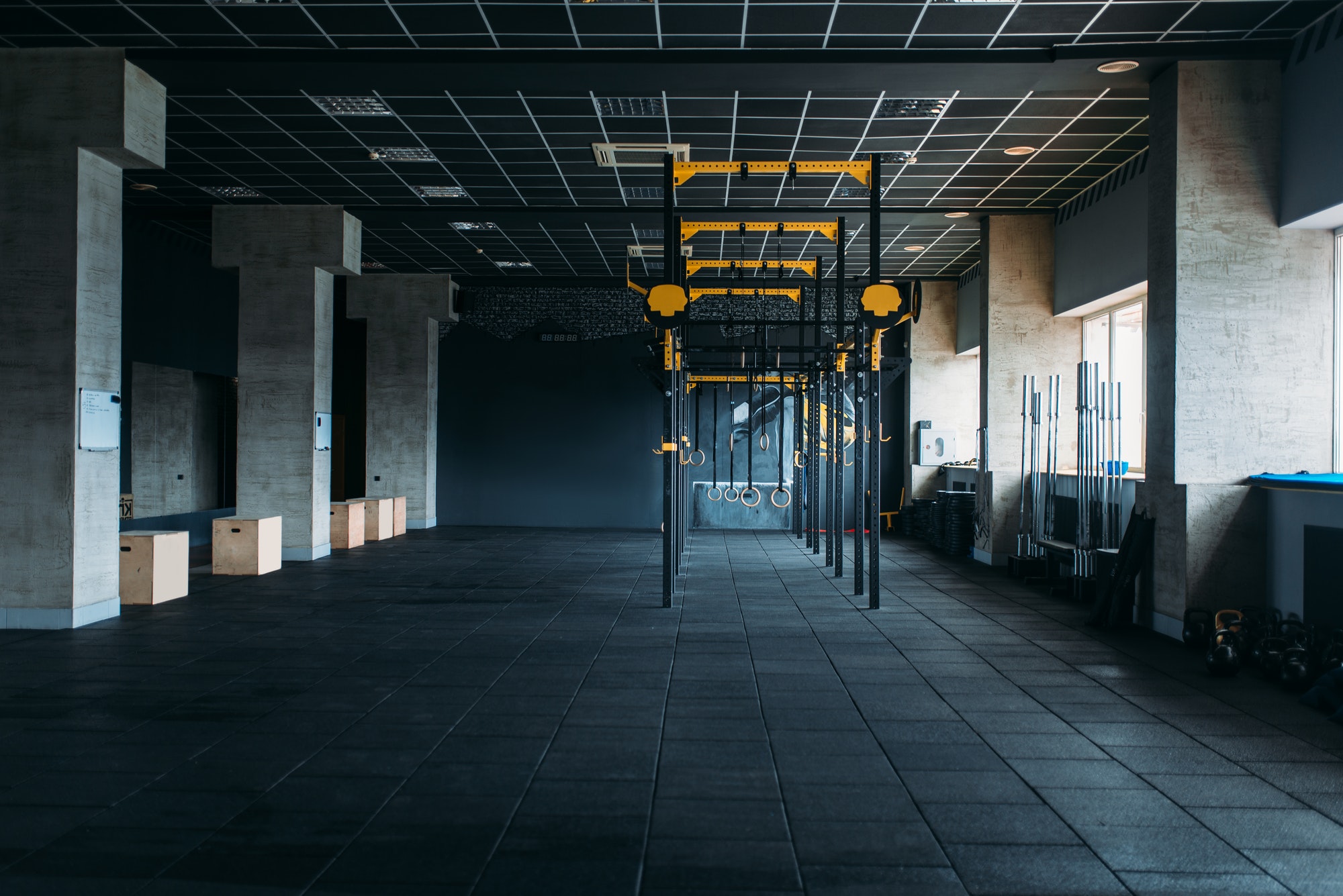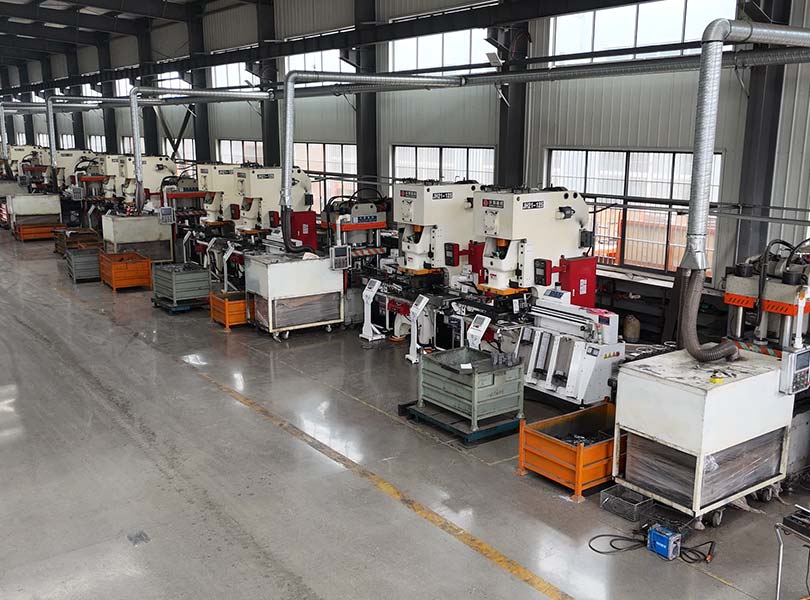
L'entraînement en force n'est plus un petit coin de la salle de sport Dans de nombreuses installations de fitness modernes, il est devenu le centre de l'activité des membres, de la rétention et de la valeur de l'entraînement à long terme Pour les propriétaires de salles de sport, les studios de fitness, les gymnases d'hôtels, les distributeurs et les acheteurs de projets, choisir le bon équipement d'entraînement en force ne consiste pas seulement à acheter des machines Il s'agit de créer un environnement d'entraînement qui semble sûr, efficace, professionnel et qui vaut la peine d'y retourner.
Un sol de salle de sport commercial solide devrait servir de nombreux types d'utilisateurs Les débutants ont besoin de machines guidées faciles à comprendre Les haltérophiles expérimentés ont besoin d'un équipement stable avec de meilleures options de chargement Les entraîneurs personnels ont besoin de postes flexibles qui prennent en charge plusieurs mouvements Les gestionnaires d'installations ont besoin de machines durables capables de gérer une utilisation quotidienne répétée.
C'est pourquoi une zone de résistance intelligente devrait combiner de manière équilibrée des machines sélectionnées, des machines chargées de plaques, des machines à câbles, des entraîneurs fonctionnels, des bancs, des racks et des poids libres. Vous pouvez explorer l'intégralité de RIZE équipement d'entraînement en force catégorie pour comprendre comment différents types de machines peuvent fonctionner ensemble dans une seule installation.
Table des matières
Pourquoi l'équipement d'entraînement de force est devenu un investissement de base pour la gym
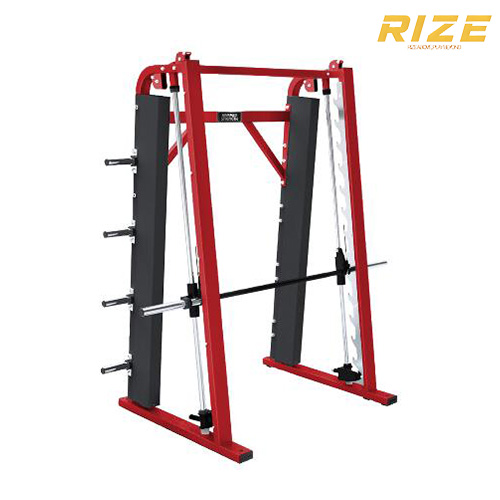
L'entraînement en force a attiré une plus grande attention parce que les utilisateurs recherchent plus que de simples entraînements à brûler des calories Beaucoup de gens comprennent maintenant que l'entraînement en résistance soutient la force musculaire, la posture, la stabilité des articulations, la composition corporelle, la performance sportive et la fonction physique à long terme.
Selon le Organisation mondiale de la santé, [TRADUCTION] ?Les adultes devraient inclure des activités de renforcement musculaire impliquant les principaux groupes musculaires au moins deux jours par semaine Cela a rendu les zones de force plus importantes dans les gymnases commerciaux, les salles de fitness d'entreprise, les installations universitaires, les hôtels et les centres de bien-être.
Pour les exploitants de gymnases, cette tendance crée une opportunité claire Une installation avec une zone de force bien planifiée peut attirer en même temps des débutants, des haltérophiles sérieux, des utilisateurs axés sur la rééducation et des membres du fitness en général.
Cependant, le simple fait de placer de nombreuses machines dans une seule pièce ne crée pas une installation solide. L'équipement doit correspondre aux objectifs des utilisateurs, à l'espace disponible, au flux de formation, aux attentes en matière de sécurité et à la capacité de maintenance.
Commencez par les utilisateurs avant de choisir les machines
La première erreur que font de nombreux acheteurs est de sélectionner un équipement de résistance en fonction uniquement de l'apparence ou de la quantité du produit. Une meilleure approche consiste à définir d’abord les utilisateurs.
Un club de fitness commercial peut avoir besoin d'un large mélange de machines car il dessert de nombreux types de membres Une salle de sport d'hôtel peut avoir besoin d'un équipement compact et intuitif car les utilisateurs s'entraînent de manière indépendante Un studio d'entraînement personnel peut avoir besoin de machines flexibles qui prennent en charge de nombreux exercices dans un espace plus petit. Une salle de sport axée sur la force peut avoir besoin de machines lourdes chargées de plaques, de supports, de plates-formes et de poids libres.
Avant de choisir un équipement d'entraînement en force, posez ces questions :
Qui utilisera la salle de sport le plus souvent ?
Sont-ils débutants, utilisateurs de fitness en général, athlètes, bodybuilders, clients d'hôtel, employés, ou étudiants ?
Les usagers s'entraîneront-ils seuls ou avec des autocars ?
L'installation est-elle axée sur le bien-être général, le renforcement musculaire, l'entraînement fonctionnel ou l'entraînement au rendement ?
Quelle est la quantité d'espace disponible pour le mouvement, le chargement et la circulation en toute sécurité ?
L'équipement sera-t-il utilisé légèrement, modérément ou lourdement chaque jour ?
Ces questions vous aident à éviter d'acheter trop de machines qui semblent impressionnantes mais ne correspondent pas à la demande réelle de formation.
Comprendre les principaux types d'équipement d'entraînement en force
Une zone de force professionnelle comprend habituellement plusieurs catégories d'équipement Chaque catégorie joue un rôle différent.
| Type d'équipement | Meilleur Pour | Focus d'achat de clés |
|---|---|---|
| Machines sélectées | Débutants, entraînement guidé, zones de circuits | Mouvement fluide, réglage facile, chemin d'entraînement clair |
| Machines chargées de plaques | Utilisateurs avancés, gymnases axés sur la force | Stabilité du cadre, angle de chargement, sensation de mouvement |
| Machines à câbles | Formation polyvalente, entraînement personnel, mouvement fonctionnel | Qualité de poulie, lisse du câble, plage de réglage |
| Entraîneurs fonctionnels | Formation multi-exercices, studios, salles de sport compactes | Efficacité spatiale, variété d'exercice, mouvement à deux bras |
| Bancs | Zones de poids libres, entraînement d'haltères, support d'haltères | Stabilité, réglage de l'angle, durabilité du coussin |
| Racks et plates-formes | Entraînement de force lourde, levées composées | Résistance structurelle, espacement de sécurité, planification des sols |
| Poids libres | Entraînement progressif, entraînements complets du corps | Qualité de préhension, stockage, flux utilisateur |
Le meilleur sol de salle de sport ne repose généralement pas sur un seul type. Il combine différents types d'équipements afin que les membres puissent passer d'un entraînement guidé à un travail de force plus avancé.
Équipement de force sélectorisé : la Fondation conviviale pour les débutants
Les machines de résistance sélectorisées sont souvent le meilleur point de départ pour les salles de sport commerciales générales, elles utilisent des piles de poids, des broches, des bras de mouvement guidés et des chemins de mouvement fixes, Cela les rend plus faciles à comprendre pour les nouveaux utilisateurs.
Les machines sélectées courantes comprennent la presse thoracique, la presse à épaule, le lat pulldown, la rangée assise, l'extension des jambes, la boucle des jambes, les machines à cuisses intérieures et extérieures, les machines abdominales et les rallonges dorsales.
Le principal avantage de l'équipement sélectorisé est la confiance Un débutant peut s'asseoir, régler le siège, choisir un poids et s'entraîner sans avoir besoin de charger des plaques ou de comprendre des étapes de configuration complexes.
Pour les salles de sport à fort trafic, les machines sélectées prennent également en charge un roulement de personnel plus rapide. Les membres peuvent rapidement modifier la résistance et se déplacer dans un circuit. Ceci est utile pour les installations de bien-être, les hôtels, les écoles et les gymnases comptant de nombreux nouveaux utilisateurs.
Lorsque vous comparez un équipement de résistance sélectorisé, concentrez-vous sur le mouvement fluide, la plage de réglage, le confort du coussin, la sensation de la pile de poids et la clarté avec laquelle la machine communique l'exercice prévu.
Équipement de résistance chargé en plaques : la zone de performance
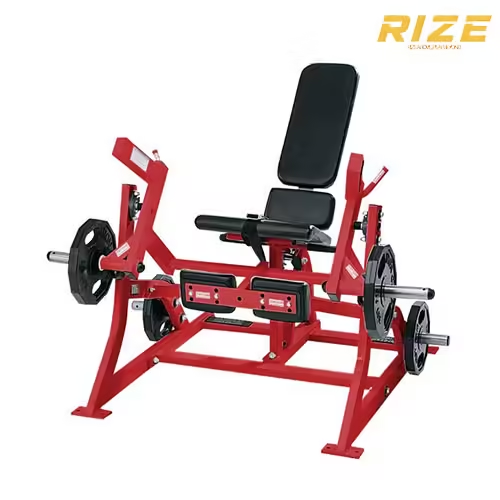
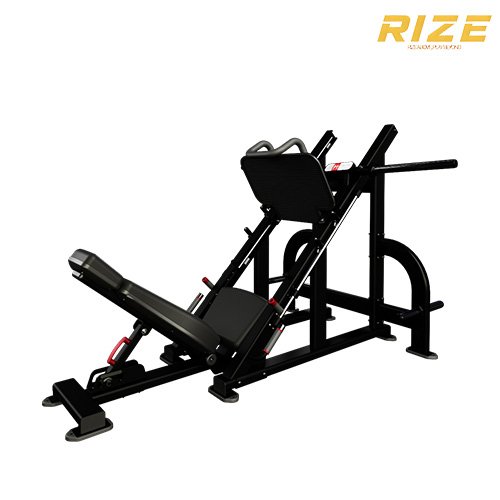
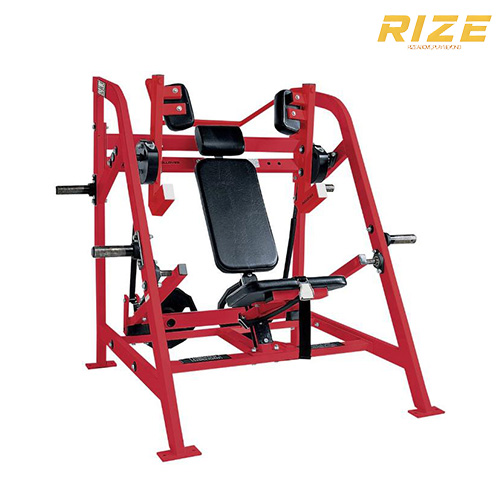
Les machines chargées de plaques sont souvent préférées par les utilisateurs expérimentés car elles offrent une sensation de chargement plus forte et une résistance plus directe. Ces machines utilisent des plaques de poids externes au lieu d'une pile de poids fixe.
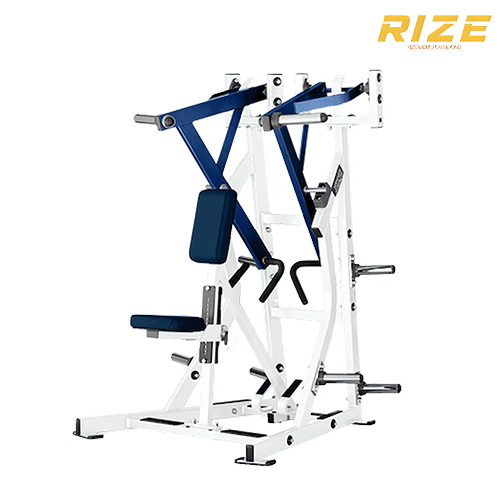
Une salle de sport commerciale avec des utilisateurs sérieux de la force doit inclure des options chargées de plaques pour les principaux modèles de mouvement tels que la presse thoracique, la presse à épaule, la rangée, le retrait, le squat, la presse à jambes, l'entraînement à la fessière et l'entraînement des mollets.
L'équipement chargé de plaques peut rendre une zone de force plus professionnelle Il aide également les utilisateurs qui veulent une progression plus lourde, le chargement unilatéral, et une expérience de formation plus orientée vers la performance.
Cependant, ces machines ont besoin de plus d'espace Les utilisateurs doivent charger et décharger les plaques des deux côtés, de sorte que la disposition doit permettre un dégagement suffisant Le stockage des plaques doit également être prévu à proximité pour réduire l'encombrement et améliorer la sécurité.
Si votre installation est au service de membres avancés ou d'utilisateurs axés sur la force, RIZE's équipement de résistance chargé en plaques peut être utilisé pour construire une zone d'entraînement plus puissante.
Machines à câble et baskets fonctionnelles : la partie la plus flexible de la salle de sport
Les machines à câble et les entraîneurs fonctionnels sont précieux car ils prennent en charge de nombreux schémas de mouvement dans une seule station. Ils peuvent être utilisés pour l’entraînement du haut du corps, l’entraînement du bas du corps, les exercices de base, les mouvements de rotation, le travail unilatéral, les exercices de type rééducation et les séances d’entraînement personnel.
Pour les studios d'entraînement personnels et les salles de sport commerciales compactes, cette flexibilité est particulièrement importante. Une station câblée peut prendre en charge des dizaines d'exercices sans nécessiter de machine séparée pour chaque mouvement.
Un bon système de câble doit se sentir lisse du début à la fin Le mouvement de la poulie ne doit pas se sentir rugueux ou instable Le câble doit revenir de manière cohérente Les points de réglage doivent être simples et sécurisés.
Les entraîneurs fonctionnels sont également utiles car ils prennent en charge les angles de mouvement naturels. Les utilisateurs ne sont pas enfermés dans un seul chemin fixe, de sorte que les formateurs peuvent créer des programmes plus personnalisés.
Pour les installations qui souhaitent une plus grande variété d’exercices sans utiliser trop d’espace, machines à câbles et entraîneurs fonctionnels sont souvent un investissement intelligent.
Bancs, supports et poids gratuits : ne les traitez pas comme des accessoires
De nombreux acheteurs se concentrent fortement sur les grandes machines et traitent les bancs, les supports et les poids libres comme des articles secondaires C'est une erreur.
Une zone d'entraînement en force dépend de ces fondamentaux Les haltères, les haltères, les bancs, les racks et les plaques soutiennent l'entraînement progressif, les entraînements complets du corps et de nombreux mouvements de force classiques Ils donnent également aux membres plus de liberté pour personnaliser leurs entraînements.
Un banc médiocre peut rendre les exercices de pressage, d'aviron et assis instables. Une zone d'haltères mal planifiée peut devenir bondée et dangereuse. Un support sans suffisamment d’espace environnant peut interrompre le flux de toute la salle de sport.
Lorsque vous choisissez des bancs, faites attention à la stabilité du cadre, à la densité des coussinets, aux angles de réglage, à la conception des roues, au placement des poignées et à la sécurité avec laquelle le banc se verrouille en position. Vous pouvez voir celui de RIZE bancs de gymnastique commerciale pour différentes dispositions de zone de force.
Les zones de poids libre devraient également inclure un rangement approprié Les haltères, assiettes et bars organisés donnent au gymnase un aspect plus propre et aident les membres à s'entraîner plus en toute sécurité.
Planifiez la zone de force par modèle de mouvement
L'un des meilleurs moyens d'organiser l'équipement d'entraînement en force est par le modèle de mouvement.
Au lieu de placer les machines de manière aléatoire, regrouper les équipements en zones logiques :
Entraînement de la poitrine et des épaules
Retour et mouvements de traction
Entraînement des jambes
Formation par câble et fonctionnelle
Entraînement poids libre
Travaux de base et accessoires
Espace d'étirement et de récupération
Cette disposition aide les membres à comprendre la salle de sport plus rapidement Elle réduit également la distance de marche pendant les entraînements Par exemple, un membre qui entraîne le haut du corps peut passer de la presse thoracique à la presse à épaule en passant par le câble sans traverser toute la salle de sport.
Une disposition basée sur les mouvements aide également le personnel à expliquer l'installation aux nouveaux utilisateurs Elle crée une expérience plus professionnelle et améliore la confiance des membres.
La sécurité doit être intégrée à la décision d'achat
L'équipement commercial de musculation doit être sûr pour une utilisation répétée par de nombreuses personnes différentes Les acheteurs doivent évaluer la sécurité avant l'achat, et non après l'installation.
Les principaux détails de sécurité comprennent des cadres stables, des broches de réglage sécurisées, des bras de mouvement fluides, un cheminement approprié des câbles, des soudures solides, des points de contact protégés, des sièges stables, des étiquettes d'avertissement transparentes et un dégagement suffisant autour de l'équipement.
La sécurité des équipements de formation stationnaires est couverte par des normes telles que ISO 20957, [traduction], qui traite des exigences générales de sécurité et des méthodes d'essai pour les équipements d'entraînement fixes Les acheteurs d'équipements de résistance peuvent utiliser ce type de norme comme référence lorsqu'ils évaluent les attentes en matière de qualité.
La sécurité est également affectée par la disposition Même les machines bien construites peuvent devenir risquées si elles sont placées trop près les unes des autres Les machines chargées en plaques ont besoin d'espace pour les plaques de chargement Les bancs ont besoin d'espace pour se déplacer Les machines à câbles ont besoin d'un dégagement suffisant pour les exercices dynamiques.
Une zone de résistance sûre doit permettre aux utilisateurs de s'entraîner sans heurter l'équipement, les murs ou d'autres membres.
La durabilité compte plus que les premières impressions
L'équipement commercial de musculation doit gérer une utilisation quotidienne répétée Une machine peut paraître attrayante lorsqu'elle est neuve, mais la durabilité dépend de détails plus profonds.
Parmi les facteurs de durabilité importants, citons
Épaisseur et structure du cadre
Cohérence de soudage
Qualité du revêtement en poudre
Qualité du roulement et du pivot
Durabilité des câbles et poulies
Douceur de la tige de guidage
Résistance au rembourrage
Fiabilité du réglage du siège
Mouvement de la pile de poids
Matériel de préhension et finition de la poignée
Pour les propriétaires et les distributeurs de salles de sport, la durabilité affecte plus que la durée de vie de la machine. Cela affecte la confiance des membres, la charge de travail de maintenance et la réputation des installations à long terme.
Si les membres voient régulièrement des câbles cassés, des coussinets déchirés, des poignées desserrées, des bancs instables ou des machines marquées comme hors service, ils peuvent perdre confiance dans la salle de sport.
Une décision d'achat d'équipement solide doit toujours prendre en compte l'utilisation quotidienne, l'accès à la maintenance, les pièces de rechange et le support après-vente.
De quelle quantité d’équipement de résistance un gymnase commercial a-t-il
Il n'y a pas de réponse unique car chaque installation est différente Cependant, les acheteurs peuvent utiliser une méthode de planification pratique.
D'abord, décider du rôle de la zone de force Est-ce une petite zone de soutien ou l'attraction principale de la salle de sport ? puis estimer le nombre d'utilisateurs pendant les heures de pointe Enfin, choisir l'équipement qui supporte les schémas d'entraînement les plus courants.
Pour une salle de sport commerciale équilibrée, la zone de musculation peut comprendre
Machines à pousser le haut du corps
Machines à tirer le haut du corps
Machines à jambes
Machines à câbles
Entraîneurs fonctionnels
Bancs
Haltères
Racks ou plates-formes
Stations-formation de base
Rangement de plaques et rangement d'accessoires
Pour un hôtel ou une salle de sport d'appartement, la liste peut être plus petite et plus compacte Pour une installation de musculation professionnelle, la liste peut être beaucoup plus grande et inclure plus d'équipement chargé de plaques, de racks et de poids libres.
Le but n'est pas de copier une autre salle de sport Le but est de créer une installation qui correspond à vos utilisateurs.
Erreurs d'achat courantes à éviter
Choisir un équipement de musculation devient plus facile lorsque vous savez quelles erreurs éviter.
Acheter trop de machines similaires
Une salle de sport n'a pas besoin de cinq machines qui entraînent presque le même mouvement tout en manquant d'autres groupes musculaires majeurs Un modèle de mouvement équilibré est plus précieux que l'équipement répété.
Ignorer les débutants
L'équipement avancé est important, mais les débutants représentent souvent une grande partie de l'adhésion à la salle de sport Si la salle de sport semble intimidante, les nouveaux utilisateurs peuvent cesser de venir.
Demande d’entraînement des jambes sous-estimée
L'équipement de jambe nécessite souvent des machines plus grandes, de sorte que les acheteurs réduisent parfois trop cette section. Mais la presse de jambe, le squat, l'extension de jambe, la boucle de jambe et l'équipement d'entraînement de la fessière sont importants pour une zone de force complète.
Oublier le dégagement autour de l'équipement
L'entraînement en force a besoin d'espace de mouvement Des dispositions bondées rendent la salle de sport inconfortable et peuvent augmenter les risques pour la sécurité.
Choisir basé uniquement sur des photos
Les photos montrent la conception, mais elles ne peuvent pas montrer pleinement la douceur du mouvement, la stabilité, la qualité de réglage et l'accès à la maintenance.
Ne planifie pas le stockage
Les assiettes, les barres, les poignées, les accessoires et les accessoires nécessitent un rangement organisé. Sans rangement, la salle de sport semble rapidement en désordre.
Une meilleure liste de contrôle pour les acheteurs d’équipements de musculation
Avant de finaliser votre commande, utilisez cette liste de contrôle :
Définissez vos utilisateurs cibles
Décider du rôle de la zone de force
Planifiez l'équilibre cardio et force
Grouper les machines par motif de mouvement
Inclure un équipement sélectorisé adapté aux débutants
Ajoutez des machines chargées de plaques pour les utilisateurs avancés
Utilisez des machines à câbles pour former la variété
Planifiez soigneusement les bancs, les supports et les poids libres
Vérifier les normes de sécurité et le dégagement
Évaluer la qualité du cadre et les pièces mobiles
Confirmez la maintenance et le support des pièces de rechange
Planifiez le stockage des assiettes et des accessoires
Laissez de la place pour de futures améliorations
Un processus d'achat professionnel réduit les erreurs et aide l'installation finale à se sentir plus complète.
Conclusion
Choisir un équipement d'entraînement en force est l'une des décisions les plus importantes dans la planification de gymnases commerciaux Une installation solide n'est pas créée en achetant des machines aléatoires Elle est créée en comprenant les utilisateurs, les objectifs d'entraînement, le flux d'aménagement, les exigences de sécurité et la durabilité à long terme.
Les machines sélec torisées aident les débutants à s'entraîner en toute confiance Les machines chargées de plaques soutiennent les utilisateurs sérieux de la force Les machines à câbles et les entraîneurs fonctionnels apportent de la flexibilité Les bancs, les racks et les poids libres créent les bases d'un entraînement progressif.
Lorsque ces catégories fonctionnent ensemble, votre salle de sport devient plus facile à utiliser, plus facile à gérer et plus attrayante pour les membres.
Si vous prévoyez une nouvelle installation de remise en forme ou améliorez votre zone de musculation actuelle, explorez la gamme complète de RIZE équipement d'entraînement en force ou contactez-nous pour discuter d'un plan d'équipement adapté à votre projet.