Table des matières
Le machine de développé couché en position assise is one of the most underrated pieces of equipment in upper‑body strength training — yet for many trainees, it offers unmatched control, safety, and chest isolation potential compared with free‑weight alternatives. In this comprehensive guide, you’ll learn how to use it smartly, build your routine, avoid mistakes, and track real progress so you can maximize muscle gains and strength improvements.
Throughout this article, you will also find useful internal links to resources on rize‑sport‑fe.com so you can deepen your understanding and explore related equipment or guides. Rize Sport China Co., Ltd
Pourquoi la machine à développé couché assis devrait être un élément essentiel de l'entraînement
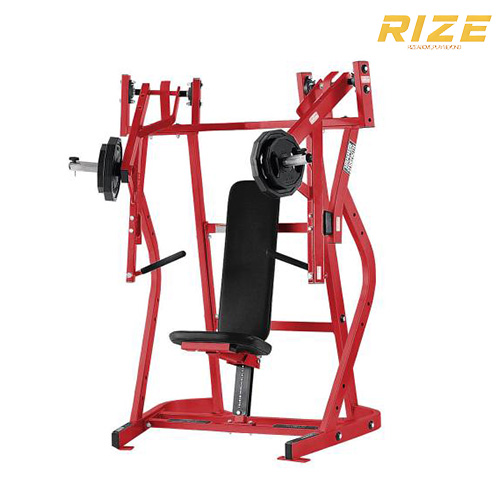
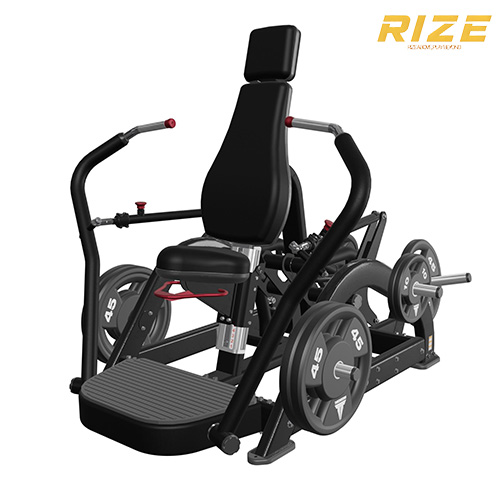
The seated chest press machine helps you target the pectoral muscles (especially the middle chest) while reducing demands on stabilizer muscles such as the rotator cuff. This makes it ideal for:
- Beginners learning pressing mechanics
- Rehabilitation phases
- Supplemental hypertrophy work
- People training without a spotter
Compared to free‑weight bench pressing, machine pressing allows you to focus on muscle contraction without worrying about balance or technique breakdown at higher loads. Gravitus
You can learn how to choose related chest equipment in the Sitting Chest Press Machine Guide on your own site. Rize Sport China Co., Ltd
The Key Muscles You’re Targeting (and Why It Matters)
Here’s how pressing movements work your upper body:
| Muscles Worked | Primary / Secondary | Function |
|---|---|---|
| Grand pectoral | Primary | Horizontal adduction and chest expansion |
| Anterior Deltoid | Secondary | Assists press via shoulder flexion |
| Triceps Brachii | Secondary | Extends the elbow during the press |
| Serratus Anterior | Stabilizer | Supports scapular movement |
| Upper Back & Core | Stabilizers | Help maintain posture and support |
Understanding the muscle breakdown helps you program intelligently — for example, combining pressing with other upper‑body movements or training antagonistic muscles for balanced shoulder health. Gravitus
How to Set Up and Adjust the Machine for Best Results
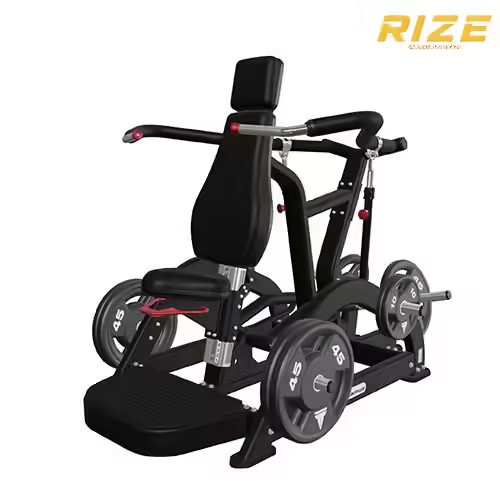
Incorrect setup is one of the biggest reasons trainees fail to see results from a machine press. Below is a step‑by‑step checklist to ensure you get mechanical advantage and muscle engagement every rep:
🔹 Step‑by‑Step Machine Setup
- Seat Height: Adjust so handles are aligned with mid‑chest height when seated.
- Back Support: Sit tall with your lower back against the pad.
- Grab Handles Firmly: Full grip (thumb around handle) stabilizes movement.
- Feet Flat on Floor: Provides stability and prevents hip drive.
- Select Weight: Start lighter to focus on technique before adding load.
A helpful video guide on machine setup and form can be found here — [Chest Press Machine Form Tutorial](https://www.youtube.com/watch?v=pLofEAcfsO8). youtube.com
⚠ Pro Tip: Never lock elbows at full extension — keep a slight bend to maintain tension in the muscles and protect your joints.
A Practical 12‑Week Progression Plan for Visible Gains
To turn your seated chest press sessions into real results, consistency and progression are key. Below is a detailed weekly progression template you can follow:
Seated Chest Press Training Plan
| Week | Sets | Reps | Intensity (% of 1RM) | Focus |
|---|---|---|---|---|
| 1–2 | 3 | 10 | 50–60% | Learn form, establish control |
| 3–4 | 3 | 8–10 | 60–65% | Build strength baseline |
| 5–6 | 4 | 8 | 65–70% | Increase volume with stability |
| 7–8 | 4 | 6–8 | 70–75% | Push strength adaptation |
| 9–10 | 5 | 5–6 | 75–80% | Near power phases |
| 11–12 | 5 | 3–5 | 80–85% | Max strength build |
📌 How to estimate 1RM safely: If you don’t know your exact 1‑rep max, use a submax set and reference a calculator chart (e.g., a 10‑rep max → approx 75% of 1RM). Gravitus
Real‑World Case Study: From Beginner to Beast
Let’s look at a real case to illustrate what measurable progress can look like:
Athlete: “Alex,” 28, gym novice
Initial 10RM on Chest Press Machine: 60 kg
Goal: Build strength and chest hypertrophy
Results After 10 Weeks Following the Plan Above
| Metric | Week 1 | Week 10 | Improvement |
|---|---|---|---|
| 10RM Seated Chest Press | 60 kg | 95 kg | +58% |
| Chest Girth Increase | 95 cm | 99 cm | +4 cm |
| Overall Bench Press 1RM | 80 kg | 105 kg | +31% |
Key Takeaways:
✔ Focused progressive overload yields strength and size gains
✔ Improved chest stability translates to free‑weight performance
Note: Bench press improvements often accompany machine training because of improved movement pattern familiarity and muscle strength.
Avoid These Common Form Mistakes (and How to Fix Them)
Mistakes often roll up into a few categories — here’s how to spot and correct them:
Mistake #1: Too Much Weight Too Soon
Lifting heavy without stable technique shifts work to the shoulders and traps. Start lighter and focus on full range motion.
Fix: Perform reps at a slower tempo (2s press, 3s return) to ensure muscular effort. Gravitus
Mistake #2: Elbows Flaring Too Wide
When your elbows fly outward, the risk of shoulder strain skyrockets.
Fix: Keep elbows slightly tucked (~45°) throughout the motion. Engage your back muscles to stabilize.
Mistake #3: Rushing Repetitions
Rushing through sets reduces time under tension — a key driver for muscle growth.
Fix: Use controlled rep cadences and pause briefly at peak contraction before lowering the weight.
Complementary Exercises to Maximize Chest Growth
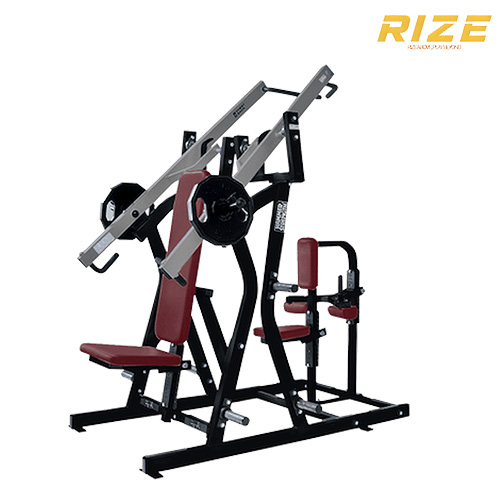
To fully exploit your chest training potential, combine seated machine presses with additional movements:
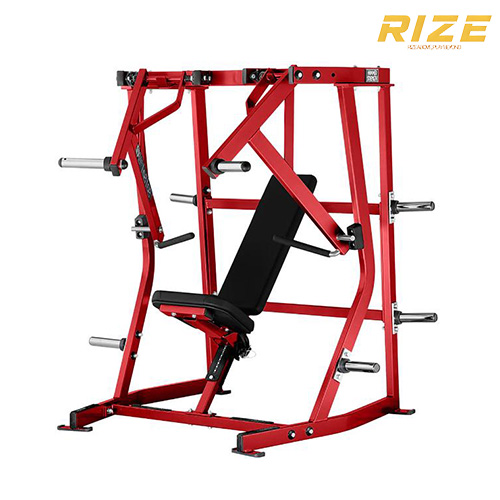
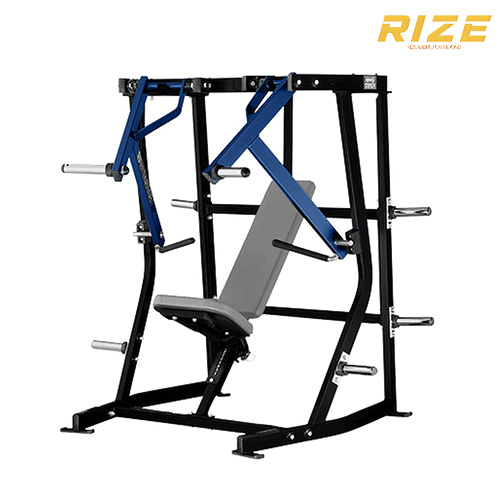
🔹 Incline Chest Press Machine — upper chest emphasis
Link: Inclined Chest Press Machine Guide Rize Sport China Co., Ltd
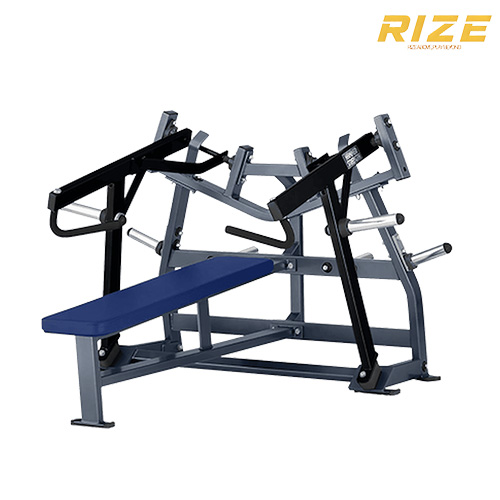
🔹 Chest Press Machine Lying Down — horizontal press variation
Link: Machine de développé couché Rize Sport China Co., Ltd
🔹 Plate‑Loaded Chest Press (e.g., RZ‑DX01 Chest Press)
Product link: RZ‑DX01 Chest Press Rize Sport China Co., Ltd
These variations help recruit different parts of the pectoral muscle and avoid training plateaus.
Conclusion
The seated chest press machine is far more than a beginner tool — it’s a versatile strength builder, stabilizer educator, and muscle developer that deserves a spot in your training program. With proper setup, progression, and technique, you can unlock meaningful strength and hypertrophy gains while minimizing risk.
FAQ
How often should you train chest on the machine?
Training 2–3 times per week with adequate recovery is optimal for most individuals.
Does the machine targeting differ from bench press?
Yes — the machine focuses more on isolation and guided motion, while bench press demands stabilization and engages more auxiliary muscles. Gravitus
Les débutants peuvent-ils se muscler uniquement avec des machines ?
Absolutely — machines offer a safe platform to build strength before advancing to more complex lifts.
Should you pair machine training with free weights?
Yes — combining both delivers balanced strength and hypertrophy progress.
What’s the ideal rep range for hypertrophy?
8–12 reps per set typically yields significant muscle growth when executed with controlled tempo.
Is machine training suitable for injury rehabilitation?
Often yes — the guided movement helps reduce instability, but always consult a healthcare professional when injured.